SEO Guide for Attorneys & Lawyers (2026 Edition)

The legal industry has become one of the most competitive spaces online — and whether you’re a solo practitioner, small local law office, or a multi-location firm, your potential clients are turning to Google before they make a phone call.

Today, more than 96% of people search online when looking for legal help, meaning your visibility in search results can determine whether a client chooses you or a competing law firm. With increasing competition, rising ad costs, and shifting consumer behavior, having a strong SEO strategy isn’t just an advantage — it’s essential for growth, credibility, and consistent case inquiries.

If your website isn’t showing up when someone searches “family lawyer near me” or “best personal injury attorney in my city,” you are leaving valuable cases — and revenue — on the table.

What Is SEO for Attorneys?

SEO for attorneys (Search Engine Optimization) is the practice of optimizing a law firm’s website and online presence so it appears at the top of search engine results when people look for legal services.

Examples of search queries include:
The goal of attorney SEO is visibility → traffic → leads → new signed clients.

Unlike traditional advertising where you chase leads, SEO brings potential clients directly to you — at the exact moment they need legal help.

Why Is SEO for Law Firms Important?

If your firm isn’t visible online, you’re losing clients — not because you’re not qualified, but because prospects can’t find you.

SEO helps law firms:
🐞

Build trust and authority

🔗

Generate organic traffic indefinitely

🗺️

Reduce reliance on expensive ads and referrals

🤖

Compete with large firms

📄

Become the go-to firm in their area

SEO Strategies for Lawyers (Step-by-Step)

Here is how to build a successful SEO strategy for law firms.

1- Research & Apply Strategic Keywords

Keyword research is the foundation of SEO. For attorneys, keywords fall into 4 major categories:

📘

Practice-Area Keywords

Examples:
• “Personal injury lawyer”
• “Divorce attorney”
• “Real estate lawyer”
• “Estate planning attorney”

📍

Local Keywords

Add city/town/neighborhood:
• “Family lawyer Phoenix”
• “Car accident lawyer near me”
• “Immigration attorney Los Angeles”

🔎

Long-Tail Keywords

More specific searches (high conversion):
• “How much does a DUI attorney cost?”
• “Can I sue for workplace harassment?”

💼

Commercial Intent Keywords

Searches from ready-to-hire users:
• “Best criminal defense firm”
• “Free lawyer consultation near me”
• “Hire injury attorney”

📝

Where to Use These Keywords

✔ Page titles
✔ Headers
✔ URLs
✔ Meta descriptions
✔ Body content
✔ Alt text
✔ Internal links

1- Include Service Pages on Your Legal Website

Each practice area should have its own dedicated page.

Example structure:

Each service page should include:

Clear headline
What the service covers
FAQs
Process breakdown
Case results or testimonials
Call-to-Action (CTA) for consultations
3 - Include Service Pages on Your Legal Website

Clients hire people — not websites.

Add optimized attorney profiles including:

Google also uses bios for E-E-A-T: Expertise, Experience, Authority, and Trust.

4 - Strategize Legal Blog Posts

Blogs build authority, educate potential clients, and rank for long-tail keywords.

Examples:

Blog posts should follow:

Answer-based writing

Clear headings

Schema markup

FAQ section

Internal links to related practice pages

Posting frequency:

At least 2–4 blogs per month for steady ranking growth.

5 - Pay Attention to Technical SEO

Technical SEO ensures your website is fast, secure, indexed, and accessible.

Checklist:

🔒

HTTPS Secure

📱

Mobile-friendly

🗂️

XML Sitemap Submitted

Fast Load Speed (under 2 seconds)

🔗

Clean, Crawlable URLs

📊

Schema Markup (Local Business Schema)

No Broken Links or Errors

ADA Accessibility Optimization

Google prioritizes fast and trustworthy websites — especially in the legal industry.

6 - Build Backlinks

Backlinks are links from other websites pointing to yours — and they’re one of the strongest ranking signals.

Ethical backlink strategies for attorneys include:

High-authority backlinks help you outrank competitors quickly.

7 - Manage Your Google Business Profile (GBP)

Your Google Business Profile is critical for local ranking and appearing in the map pack.

Optimize your listing by:

Adding Accurate Location & Service Details

Updating Office Hours

Uploading Professional Photos

Adding Practice Area Keywords

Posting Weekly Updates or FAQs

Responding to All Reviews

Enabling “Appointment” Links

Firms with optimized profiles get 3–10× more calls from local searches.

8 - Update Your Local Listings (NAP Consistency)

Ensure your:

👤
Name
📍
Address
📞
Phone Number

are exactly consistent across:

Yelp

Avvo

FindLaw

Justia

Legal directories

Local citations

Chamber of commerce listings

Inconsistency confuses Google → harming rankings.

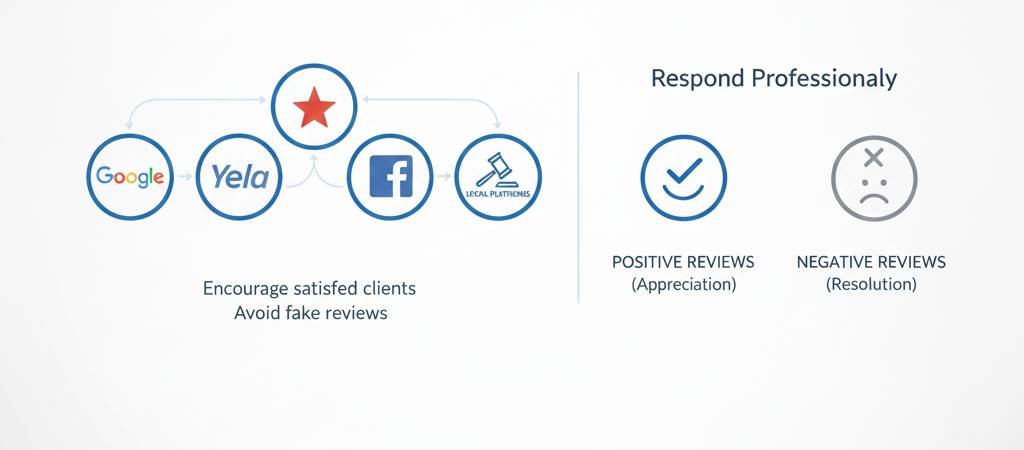
9 - Gather Reviews & Testimonials

Nothing builds trust like proof.

Encourage satisfied clients to leave reviews on:

Avoid fake or incentivized reviews — they can trigger penalties.

Respond professionally to:

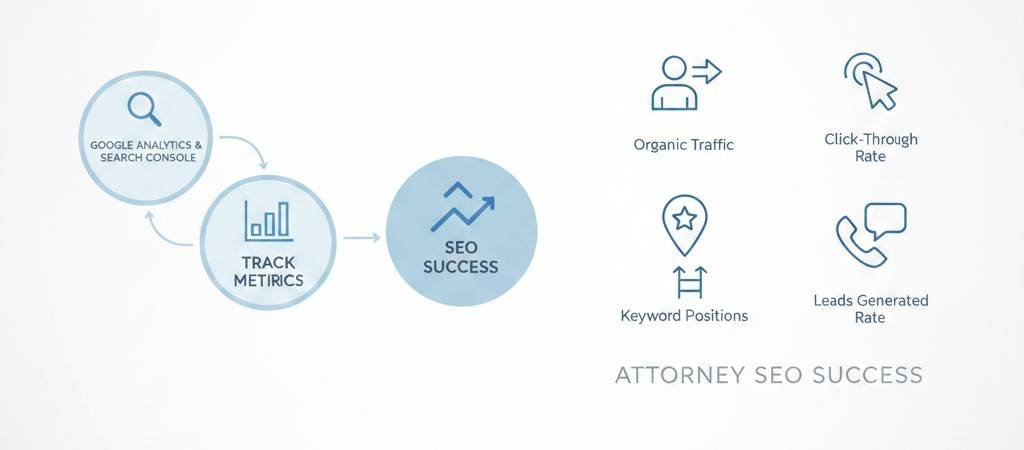
How to Measure Attorney SEO Success?

Track metrics using Google Analytics & Search Console:

KPI What It Measures
Organic Traffic Website visitors from search
Local Map Ranking Visibility in your city/region
Keyword Positions How high you rank
Click-Through Rate How persuasive your titles/descriptions are
Leads Generated Calls, forms, consultations
Conversion Rate % turning into clients

SEO is a long-term strategy — expect 4–9 months for strong traction.

Cost of SEO for Law Firms

Type of SEO Service Range
Local solo attorney $500–$1,500/month
Small firm 2–5 lawyers $1,500–$3,500/month
Large firm with multiple practice areas $3,500–$10,000/month
Full legal marketing (SEO + PPC + content + GBP + social) $5,000–$25,000/month

FAQ

What is attorney SEO and how does it work?

Attorney SEO is the process of optimizing a law firm’s website to rank higher on Google when potential clients search for legal services. It includes keyword targeting, content optimization, backlinks, local SEO, and Google Business Profile optimization.

Most attorneys begin seeing results in 3–6 months, depending on competition, website authority, and strategy execution. Highly competitive niches like personal injury or criminal defense may take 6–12 months to achieve top rankings.

Yes — PPC brings short-term leads, but SEO builds long-term organic visibility and lowers client acquisition cost. Many firms run both so they dominate paid ads + map pack + organic search

Attorneys should target service-based + location-based keywords, such as:

  • “Divorce lawyer Phoenix”
  • “Personal injury attorney near me”
  • “Best criminal defense lawyer Chicago”

Using long-tail keywords helps rank faster.

Reviews are extremely important. Google prioritizes firms with strong:
✔ Review quality
✔ Review quantity
✔ Consistency
✔ Responses

Positive reviews significantly improve local rankings and conversions.


Yes — every practice area (e.g., DUI defense, immigration, estate planning) needs its own dedicated page to rank for targeted keywords.
This improves SEO, user experience, and conversion.

Legal blogging allows law firms to rank for long-tail search questions, build trust, and demonstrate legal expertise.
Topics like “What to do after a car accident in Florida” or “Do I need a DUI lawyer?” attract ready-to-hire visitors.

Yes — when done ethically. Law firms should focus on earning high-authority backlinks from:
✔ Local directories
✔ Legal associations
✔ News publications
✔ Guest articles

Avoid spammy or automated link building—it can harm rankings.

Pricing depends on location, practice area competitiveness, and campaign size. Most law firms invest:

  • $500–$1,500/month for small firms
  • $1,500–$5,000/month for mid-size firms
  • $5,000+/month for competitive niches or multi-location law firms

Measure your progress using:

  • Google Search Console
  • Google Business Profile insights
  • Lead tracking & call analytics
  • Ranking reports
  • Traffic growth

Signs of success include higher rankings, increased website leads, and improved map visibility.

SEO Can Transform Your Law Practice

Law firms that invest in SEO today gain:
Visibility
Authority
Competitive advantage
Long-term client pipeline
Reduced advertising dependency

Whether you’re a solo attorney, growing firm, or established practice — SEO is the key to attracting clients consistently.

Trending & Latest Updates

Top-10-Gambling-SEO-Strategies-That-Work-in-2026-featured
Read More
SEO Guide for Attorneys and Lawyers featured
Read More
7 Proven Local SEO Tactics fetured
Read More